Monday, April 25, 2011

"La Ciociara (Two Women)" (1960)


Two women transformed by war and death. this is an incredibly powerful film. it reminds me of Kubrick's "Paths of Glory" in 1957. the affects of war as opposed to the war itself. This is a brutally honest film like "Paths of Glory". there is no glorifying, synthesizing, embelishing of any sort. they give it to you as it is which i love. the performances were enthralling; especially that of Sophia Loren who went through quite the transformation herself for her role as Cesira. she wants to protect her daughter and herself in the midst of war. she is beautiful, but not glamorous; like Penelope Cruz in "Volver". she is modestly wealthy for those times which makes it easier for all around her. she is headstrong and holds no trepidation in what she says or feels. this is what won her the Oscar. Her vivid portrayal of a mother having to deal with a time in which men could not even deal with. She makes choices and desicions all without the help of a man. Loren shows us that independence is important.

Rome is being heavily terrorized by the Germans during WWII. this is Lorens' and her daughter, Rosettas', played by Eleonora Brown, home. Loren decides to leave to go to her hometown in the hills of Ciociaria. she sees old friends and meets other refugees whose towns have been destroyed or deserted. We see the effects of the war throught the desperation of the refugees. Prices of food "could have bought a house last year" as Loren describes it. there are constant sirens and gun shots. German soldiers come through demanding food and water; it is really not a good time. one of the refugees is quite a radical named Michele. he hates Mussolini and despises the Germans. he is smart, holy (for the most part) but dangerous but Loren finds something in him that is rather appealing; so does her daughter. this reminded me of Dougls Sirk's "Imitation of Life" in 1959. he falls in love with Loren as well. he is taken by German soldiers to lead them through the mountains.

Sophs Loren is mezmorizing. she is so powerful and certain in her performance. also the young Eleonora Brown who was, according to IMDb, tweleve years old at the time, was incredibly mature and deserved a nomination. there were scenes towards the end of the film where we could see most change and loss of innocence which happens drastically. Brown is in love with Michele (Jean-Paul Belmondo) and is thinking about marriage. war changes her; she sees a man riding a bicycle shot dead right in front of her. at the end both are women. Loren was already a women but the title refers to the end. Brown was just a carefree little girl at the beginning, and then turns around at the end. I love the films truthful and righteous brutal approach to the subject but also throwing some Italian humor into it. the film flowed well and the ending was beautifully done.


Academy Awards, USA
YearResultAwardCategory/Recipient(s)
1962 WonOscarBest Actress in a Leading Role
Sophia Loren
Sophia Loren was not present at the awards ceremony. Greer Garson accepted the award on her behalf.

Saturday, April 23, 2011

"Ascenseur pour l'échafaud (Elevator to the Gallows)" (1958)


Incredibly chilling. in my opinion, Louis Malle's best. the way the film moved was like a Tarantino film and probably inspired him. It took place primarily in real-time which i absolutly love. everything is about consequence; what happens if: he did not go back to get the rope, or his car didn't get stolen, if she knew what was going on, if they did not have the gun... the use of dramatic irony makes you squirm. and what i love is how Malle shows all of it and in detail. he ahows several types of people. young couple: the guy is an asshole with a big head, the girl sees right through that and is incredibly naive. the wife who has dark plans for her unwanted husband and her adulterer who has no problem doing anything she wanted. a fun-loving German couple who have a nice car and so on. the way it is shot is revolutionary. how they did the scenes within the elavator shaft is still a mystery to me. And remember ladies and gentlemen-NO CGI. most everything was done for real, like a Hitchcock film. This may be one of my favorite French films.

So the woman, played wonderfully by the gorgeous Jeanne Moreau, wants her husband dead because she is cheating on him. Maurice Ronet plays the adulterer and employee of Moreau's husband who will complete the deed of killing the husband and doing a good job. After he kills the husband he gets out and remembers that he left the rope up on the roof. he goes back with his car already started. but it's closing time and while he rides the elavator up to the top floor, the electricity is shut off and the elevator stops. a young man and his girlfriend decide to steal the car and return it at the end of the day. Ronet was supposed to meet Moreau after he did the deed. but he cant because he stuck in an elevator. so when she sees his car with the young man and woman, she thinks that he did not kill her husband and moved on with someone else. but seeing as how she is madly in love with him, she decides to do some investigating around town. meanwhile the young couple is off on an adventure and decide to stop at a hotel where they meet the German man and his wife. and thats when it all begins. I love how the film cuts back and forth between the three stories. itr goes to Ronet and ironically to Moreau who is wandering the city in the rain convinced that she did not see Ronet's car and that he is still driving around somewhere. then it shows the stupid young couple lying to about everything in sight.

I am still stunned at the elevator shots. the camera that they used was so big and to position is correctly and still get the desired shot shows much maturity in filmmaking. the score by Miles Davis was amazing. i loved the jazzy, modern, film-noir feel that really worked perfectly. i loved the locations and the performances were just so organic. i saw another French film called "Quelques jours de répit" at Sundance and it had that exact natural feel to it. the characters were not historical figures, wealthy buisness men or some con man who never gets hit. they were people with unusual delimmas but those delimmas are theoretically what we face everyday AND THIS WAS IN THE 50'S!! that's why i love forgein cinema; the different perspectives on what we face in life. and it's this film that the Criterion Collection continues to save (godbless'em). this is the reason that i love film: this peice of cinematic art.

Wednesday, April 20, 2011

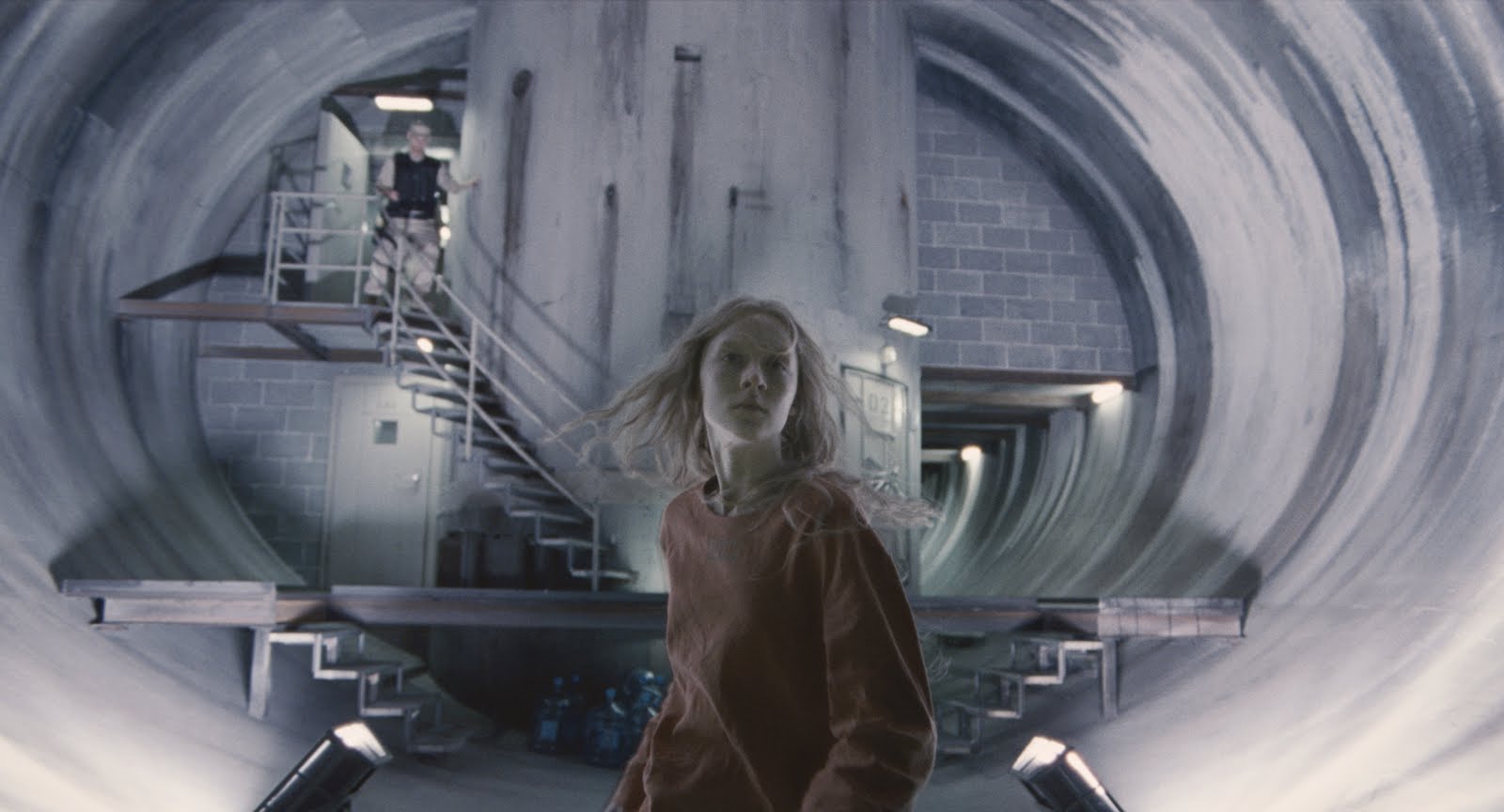
"Hanna" (2011)


I saw "Hanna" today and its the only reason I am reviewing it. i thought it was a very well made action/art house flick. Joe Wright, who directed the incredible and unique picture called "Atonement", directed this little movie and did a surprisingly goos job at it. The action sequences were normal close up shots where we can't see the actors because they are body doubles. one thing i really did enjoy were all of the locations. it was somewhat like a James Bond film. there were scenes in Holland, Berlin, Arabia, Spain and yes Texas. Saoirse Ronan is quite the actress. She had the astonishingly mature performance in "Atonement" that got her an Oscar nomination. she gets the accent down (like Cate Blanchett and Meryl Streep). the film was scored ingeniously by the Chemical Bros. who created this incredibly unique little score that made the film. it brought this modern side to the films familiar topic. i really enjoyed its prescence. Blanchett of course got the Southern accent down (she can play Elizabeth I, Kathrine Hepburn and Bob Dylan: amazing). I loved that evil manipulating side of her. the little British family on holiday was a bit out of place and the performance of the young daughter was quite funny but it really did not work of the feeling of the film. the twist was a bit predictable and i didn't like the way it was presented. of course she's different. she can kick the asses of a bunch of CIA agents and waltz right out of the building. Eric Bana should not have told the secret. i think Hanna should have found out on her own. But i have to say i was blown away by the escape scene. the music, the lights, the shots=amazing.

So this young girl Hanna is trained by her father to be this assasin. she must learn to adapt or die which i really thought was an interesting concept. she must memorize her fake school, fake friends and her fake dog Rudi in case anyone asks. she learns population of countries, various different languages and learns to be a skilled hunter. She must find Marisa Veigler who killed her mother many years ago. so the story continues into chase scenes and finding the truth about who she really is. i loved the lighting of the film; the strobe lights of reds, whites and greens. this was a really well done thriller that is smart, well-acted and absolutly well-shot. Saoirse Ronan was fabulous as usual. she was strikingly gorgeous and agressive but not innocent like in "Atonement". that is what i love about her type of actress; any accent goes. like Blanchett and Streep. Due to its early release, it probably will not get any Oscar attention butits not really Oscar material anyway. It is unique and Wright brings the familiar revenge topic to a whole new level (like Tarantino did in the Kill Bills').

"Michael Clayton" (2007)


Tilda Swinton and George Clooney in the powerful final scene...

This is an enthralling film. It is filled to the brim with energy and wit that forces you to stay with the plot. it is fast and may be a bit hard to follow at times. it takes a few viewings for you to get the full grasp of it all. i remember seeing the film for the first time in 2008 and not really liking it. i found it trying to be too smart and trying to be too ambiguous just to make it seem like it sounded smart. Was i wrong... you could not come up with a better non-action thriller. what i love most about the film is that all of the actors talk as if they actually knew what they were doing; and some might have. that to me is vital to the plot. Tilda Swinton (who won the Oscar that year) really suprised me. she was so smart and so nerve racking at the same time. she was reminiscent of Faye Dunaway in "Network": annoying, smart and makes a drastic descision but Swinton is absolutly the more nervous one. This is not a heavy film, but one that you pensate about continuosly after the film is over.


The plot is extremely complex so i really don't wasnt to get into all of the details. George Clooney gives one of the greatest performances of his career as a fixer for a prosperous law firm. His friend is a lawyer who represented a company for many years and had a mental breakdown which included striping naked and running after the plaintiff through a parking lot. its all downhill from there. I dont want to spoil anything so that's all i'm really going to say. Tom Wilkinson gives an absolutly harrowing performance as the "stripper" and i believe he should have won the Oscar that year. He should have actually won a few year ago for the heart-wrenching performance in "In the Bedroom". He is so taut and twisted very much like Peter Finch in "Network": out of his mind and thinks he's some sort of prophet out to preach the message of the universe. they both have big intentions until they are both crushed in the very same way. Swinton, who i mentioned earlier has another thrilling performance.

The film, obviously, is incredibly well written. Tony Gilroy, who adapted the Bourne Trilogy, does a masterful job at capturing a subject that has not been dealt with before. Many Clooney fans who saw the film expecting it to be more like an action flick were highly dissapointed saying it was using too many big words and was trying to be smarter than it need to be. I read many reviews all saying very similar things. Critics of course loved its bold and enthralling movement and audacity. the last traking shot is nothing as stunning as Orson Welles "Touch of Evil" from 1958 but i thought it was perfect. it gave us time to reflect on what had happend and make our own conclusions about the characters in the film. Clooney's character is doing the same: pensating on his choices. This is a really smart film with a great resolution that hold some of the best performances of the decade.


Academy Awards, USA
YearResultAwardCategory/Recipient(s)
2008 WonOscarBest Performance by an Actress in a Supporting Role
Tilda Swinton
NominatedOscarBest Achievement in Directing
Tony Gilroy
Best Achievement in Music Written for Motion Pictures, Original Score
James Newton Howard
Best Motion Picture of the Year
Sydney Pollack
Jennifer Fox
Kerry Orent
Best Performance by an Actor in a Leading Role
George Clooney
Best Performance by an Actor in a Supporting Role
Tom Wilkinson
Best Writing, Screenplay Written Directly for the Screen
Tony Gilroy

"Jackie Brown" (1997)


Quentin Tarantino is without doubt one of the most influential filmmakers of our time, and a personal favorite of mine. "Pulp Fiction" in my opnion is one of the greatest films and screenplays ever made. Roger Ebert and i agree, "Resevior Dogs" was nothing good. The Kill Bill series is excellent and "Inglorious Basterds" was good too. But "Jackie Brown" remains my second favorite of Tarantino's. This is a more mature Tarantino. Yes the f-word is constantly used like in most of his films BUT IT WORKS! that is the point, people really do talk like that. i have known people who really talk like that. It is a con, and a great one that is well presented and of course, someone is always conning another. The films opens up with the song 'Across 110th Street' by Bobby Womack which is the perfect opening and closing song.

At 2hrs and 30mins long, this crime epic is smart, bad-ass and knows what's goin' down. Jackie Brown is played in a phenomenal performance by Pam Grier who is the Queen of 70's Blaxploitation scene. she is so strong and manipulating but not belittling. she knows how to manipulate you through lying but not by browbeating. there are no real action sequences because there does ot need to be. There is hardly any blood in it at all. This is a definate homage to the early 70's blaxploitation films but like Woody Allen and Ingmar Bergman, Tarantino gets the Jack Hill films. There are not that many references to Kurosawa and Leone films as there are in Kill Bill/Pulp Fiction. He wants stright up blaxploitation but it's not a period piece; it takes place in 1995.

Grier is in a lot of trouble. She is a flight attendant who gets caught smuggling her boss' gun money on the airline she works for. the fed and cop that cought her decide to team up to find the arms dealer she works for, whose name they don't even know. So a choice is presented: tell the cop and fed about Ordell Robbie (the arms dealer played by Samuel L. Jackson) and get her freedom -except that if Jackson suspects she's talking about him, she's dead- or keep her mouth shut and serve time in jail. That's when she meets Max Cherry (Robert Forster)-her bail bondsman-, a late fifties, recently separated, burnt-out man, who falls in love with her. Then Grier comes up with a plan to play the feds off against Jackson and the guys he works with and walk off with their money and teams up with Forster. its all about choices and at times Grier is stuck between a rock and a hard place-but she never ever cracks under pressure. she is so cool and is able to keep her cool no matter if she is caught or has a gun to her head. thats what i love about her charater and Grier's performance. she played characters such as Friday Foster, Foxy Brown, Sheba Shayne, and Coffy but this performance obviously is the greatest one and i think she should have won the Oscar but she was not even nominated. her other films feature her getting into cat fights with other women and by the time the fight is over, all of the women have there shirts off. the violence was gratuitous, the nudity was excessive and tey were all about fighting pusher-men, pimps and drug-lords (trying to send a positive message out to the kids). I have seen "Coffy" and "Foxy Brown" which were junk and Tarantino knows how to take a pile of juck, recycle it and make something masterful. his type of filmmaking takes time and practice and a lot of movie watching: good and bad. when he was a kid, he would not just go to the regular old theater but go to the black part of town and watch the exploitation films where he ingested and immense amout of knowledge and inspiration. that is why all of his soundtracks are so damn good, he knows all about the music. he would not use just regular old Gladys Knight or The Temptations, he uses Willie Hutch, Brothers Johnson, Bloodstone, The Delphonics and Randy Crawford for his films. "Jackie Brown" could have been made in the 70's; it was that good. 


                                      "Foxy Brown"

                                   "Jackie Brown"


Academy Awards, USA
YearResultAwardCategory/Recipient(s)
1998 NominatedOscarBest Actor in a Supporting Role
Robert Forster

"Far from Heaven" (2002)


Julianne Moore in the heart-wrenching finally.

Todd Haynes' "Far from Heaven" is without doubt one of the most beautiful films of the past decade. I will be adding several other pictures because i think the shots of the film are so masterful. From the title of the film, we can tell the film is a melodrama and an homage to Douglas Sirk. I have seen "Magnificent Obsession", "Written in the Wind", "All that Heaven Allows" and "Imitation of Life" and i can tell you that this film could have been made in the 50's-minus the F-word. The cinematography of the film is incredibly done by Edward Lachman who really got in the style of melodramatic cinematography-whatever that means. The performance are akin to those of Rock Hudson, Lauren Bacall, Jane Wyman and Lana Turner. Melodrama shows us the side of women that were not supposed to be seen in the 50's. For example: the crying, drama, breakups, adultery etc. Sirk was brave enough to show that to us and this is an homage to that.

Julianne Moore is probably one of the greatest actresses of our time and still does not have an Oscar. She was nominated for her astounding performance but Nicole Kidman won that year in another incredible performance in "The Hours". Moore plays a calm, "liberal" (which for them means "not racist"), orthodox housewife who looses virtually everything by the curtain call. Dennis Quaid plays her husband in a descent performance. He is hard-working, good-looking, stressed out and gay. but secretly of course. yes he is cheating on her but not with another woman but a man, which is even more scandolous for the time. at that time, homosexuality was diagnosed as a sickness or birth-defect which could be treated with medication or shock therapy. Dennis Haysbert has a outstanding performance as the family's black gardener. His father died recently and Moore takes it on as her responsibility to help him. this can only lead to worse events....

Todd Haynes knows exactly what he wants and has good enough knowledge of film to acheive that. he used veteren Elmer Bernstein to create the masterful score that again make the film flourish. When i first saw the film, i did not like it. i did not like the man cheating on wife with another man part because i thought it distracted from the relationship between Moore and Haysbert which i wnated to focus on. i watched it a seconed time and still did not find it incredibly enjoyable. i found the cinematography, sreenplay (i did think the f-word was a little out of place though), score, costume design and performances beautifully contructed but sill not enjoyable. it took a third and fourth time for me to grasp the wicked sadness and beauty behind the surface of things. i also had to watch a few Sirk films to see the parallel between the two. The film recived 4 Oscar nomination NOT including Best Picture unfortunately. With all those things in mind, i think "Far from Heaven" is, and always shall be, one hell of a picture.

"That was the day I stopped believing in the wild ardor of things. Perhaps in love, as well. That kind of love. The love in books and films. The love that tells us to abandon our lives and plans, all for one brief touch of Venus. So often we fail at that kind of love. The world just seems too fragile a place for it. And of every other kind, life remains full. Perhaps it's just we who are too fragile."

-Cathy Whitaker

You can see a comparison of shots below:

Obviously the sunglasses are very similar and notice the angle...

                                "Far from Heaven"


                                "Magnificent Obsession"


The shot: light background, dark foreground was very common throughout both films...

                                "Far from Heaven"

                            "All that Heaven Allows"


The blue light or silhouette was used contantly to set the mood.

                                "Far from Heaven"
                             "Written on the Wind"


Academy Awards, USA
YearResultAwardCategory/Recipient(s)
2003 NominatedOscarBest Actress in a Leading Role
Julianne Moore
Best Cinematography
Edward Lachman
Best Music, Original Score
Elmer Bernstein
Best Writing, Original Screenplay
Todd Haynes

"Network" (1976)


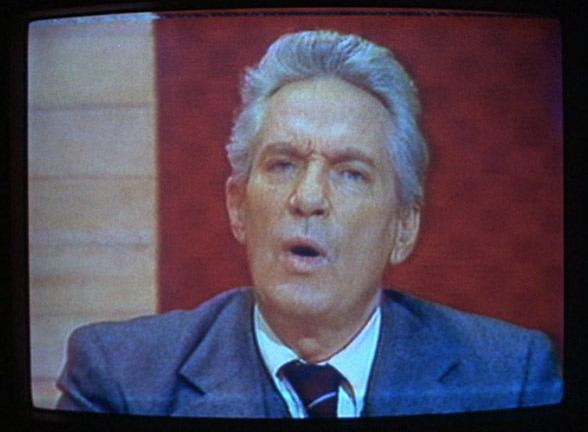
All right ladies and gentlemen, it time for the review of one of my favorite and in my opnion, one of the greatest films ever made. the script by the incredible Paddy Chayefsky was recently ranked the 8th Greatest Screenpley of all Time by the WGA but i think it deserves to be in the top 5. Most people call this film a "satire": WRONG!!! This is beyond satire. this is a prediction and a damn good one. this is what happens today in our news. look at local news sensationalizing the mediocre events going on at this time. at that time the news covered everything up and/or censcored or candy-coated everything. This is one of the first films to tell us NO! Howard Beale says about the American people,  "'Please, at least leave us alone in our living rooms. Let me have my toaster and my TV and my steel-belted radials and I won't say anything. Just leave us alone.'" Then he lunges over his desk and says, "Well, I'm not gonna leave you alone!!" He won't leave us alone, no he wants us to get MAD! he knows and even says that the world is full of bullshit and wants us to do something about it instead of just standing there. The news at this time would not allow this but Howard Beale did not care. he had rage inside of him that he needed to release.

Ok, now back to the review portion. This is wildely well-acted, smart of a film that needed and still needs to be taken seriously. Everything about this film is incredibly well organizized ("Taxi Driver"). Faye Dunaway is one of my favorite actresses of all time and her performance in this takes the cake (in this case, Oscar). she is ferocious, and knows what she wants and how to belittle enough people to get it. she is dangerous and doesn't give a damn about it. Every scene with her in it gives me the chills; as does Peter Finches'. his performance is another one of my faorites of all time. the rage in his face will make you go mad. Yes the 'mad as hell' scene is one of his proudest moments but others including scenes in the 'Howard Beale Show' are absolutly fantastic. Ned Beatty is in about 2 scenes. He plays Arthur Jenson, the owner of UBS (the network in which the film is centered around). There is that scene, in which he has that speech:


"You have meddled with the primal forces of nature, Mr. Beale, and I won't have it! Is that clear? You think you've merely stopped a business deal. That is not the case! The Arabs have taken billions of dollars out of this country, and now they must put it back! It is ebb and flow, tidal gravity! It is ecological balance! You are an old man who thinks in terms of nations and peoples. There are no nations. There are no peoples. There are no Russians. There are no Arabs. There are no third worlds. There is no West. There is only one holistic system of systems, one vast and immane, interwoven, interacting, multivariate, multinational dominion of dollars. Petro-dollars, electro-dollars, multi-dollars, reichmarks, rins, rubles, pounds, and shekels. It is the international system of currency which determines the totality of life on this planet. That is the natural order of things today. That is the atomic and subatomic and galactic structure of things today! And YOU have meddled with the primal forces of nature, and YOU... WILL... ATONE! Am I getting through to you, Mr. Beale? You get up on your little twenty-one inch screen and howl about America and democracy. There is no America. There is no democracy. There is only IBM, and ITT, and AT&T, and DuPont, Dow, Union Carbide, and Exxon. Those are the nations of the world today. What do you think the Russians talk about in their councils of state, Karl Marx? They get out their linear programming charts, statistical decision theories, minimax solutions, and compute the price-cost probabilities of their transactions and investments, just like we do. We no longer live in a world of nations and ideologies, Mr. Beale. The world is a college of corporations, inexorably determined by the immutable bylaws of business. The world is a business, Mr. Beale. It has been since man crawled out of the slime. And our children will live, Mr. Beale, to see that... perfect world... in which there's no war or famine, oppression or brutality. One vast and ecumenical holding company, for whom all men will work to serve a common profit, in which all men will hold a share of stock. All necessities provided, all anxieties tranquilized, all boredom amused. And I have chosen you, Mr. Beale, to preach this evangel."

That scene is not just a bunch of hob-gob nosense and big words. if you read it carefully, there are people in our society today that think this way. He had a small part but and incredibly vital one that got him the oscar nomination. Finch also won the Oscar posthumously but rightfully. Beatrice Straight won as well and she oly had an 11 minute part. again vital and with much force and power. William Holden, who had the great performance in Billy Wilder's masterpeice "Sunset Blvd.", turns around as the wiser one in this film. he has a wonderful performance as well and was nominated for the Oscar. Robert Duvall was goos too. The performances and screenplay and the direction from the decesed Sidney Lumet (R.I.P.) make ths film untouchable and should be given a third viewing to really get the gist of it all. But fter the film is over, i want you all to ask youselves something: was Beale having a psychotic breakdown, or did he really see the face of God?


Academy Awards, USA
YearResultAwardCategory/Recipient(s)
1977 WonOscarBest Actor in a Leading Role
Peter Finch
Nomination and award were posthumous. Finch became the first posthumous winner in an acting category. His widow Eletha Finch and screenwriter Paddy Chayefsky accepted the award on his behalf.
Best Actress in a Leading Role
Faye Dunaway
Best Actress in a Supporting Role
Beatrice Straight
Best Writing, Screenplay Written Directly for the Screen
Paddy Chayefsky
NominatedOscarBest Actor in a Leading Role
William Holden
Best Actor in a Supporting Role
Ned Beatty
Best Cinematography
Owen Roizman
Best Director
Sidney Lumet
Best Film Editing
Alan Heim
Best Picture
Howard Gottfried
'Network' becomes the second film to win three awards for acting, following A Streetcar Named Desire (1951).